
Is Walking Enough for Longevity? What Research Says About Walking, Intensity, and Strength
Walking reduces health risks compared to inactivity. Higher-intensity activity and strength training may provide additional benefits or improve fitness more efficiently.
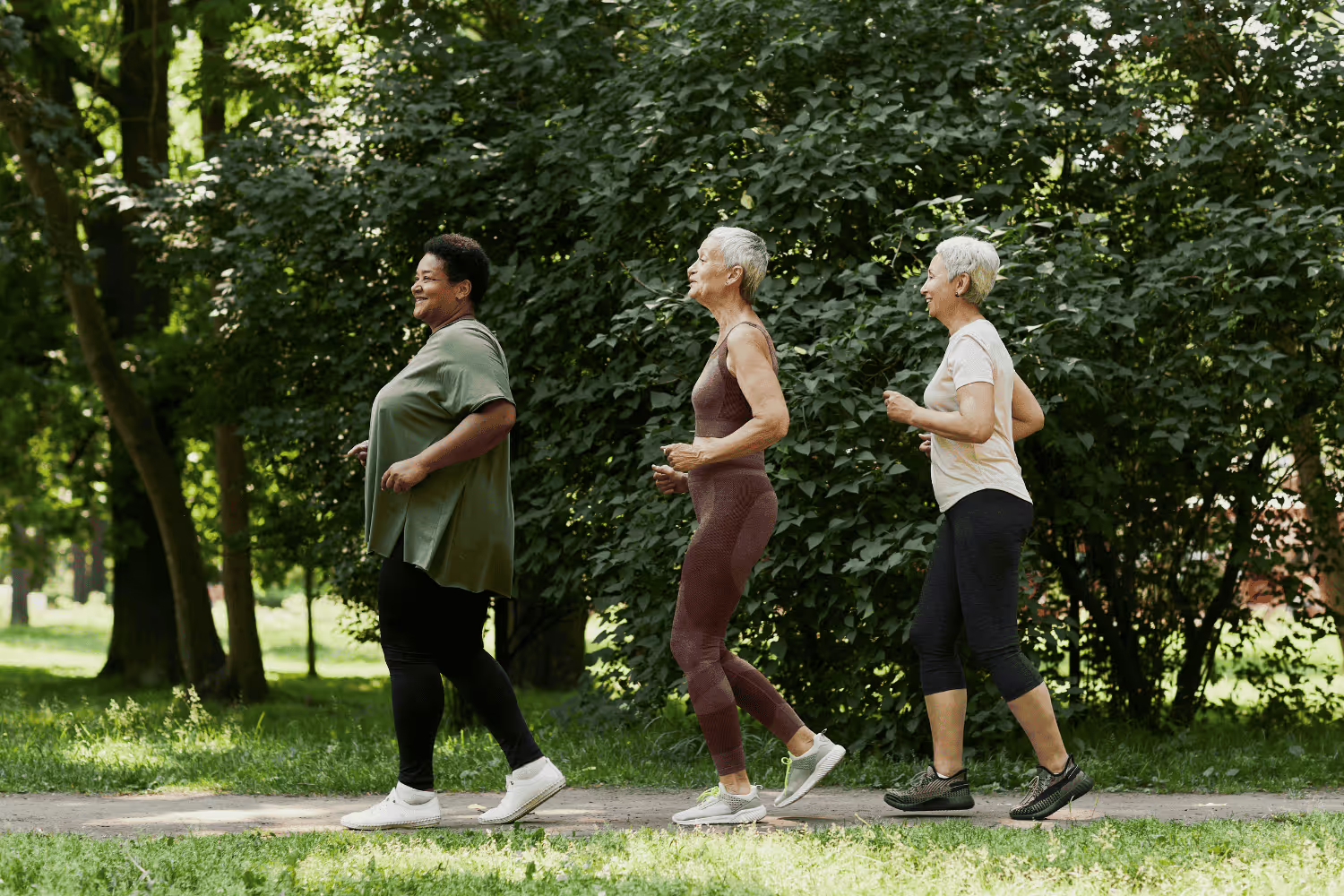
Walking is one of the most accessible forms of exercise. It requires no equipment, minimal training, and carries low injury risk. Public health guidelines frequently recommend it as a starting point for improving overall health.
But when the goal shifts from general activity to optimizing longevity, a more specific question emerges: Is walking alone sufficient to maximize long-term protection?
The research suggests that walking provides meaningful health benefits and reduces risk compared to inactivity. However, when the goal is optimizing long-term health and longevity, efficiency and training variety become important considerations.
What Walking Does Well
Walking offers clear advantages, particularly for individuals transitioning from sedentary lifestyles.
Consistent walking can:
- Enhance insulin sensitivity
- Reduce blood pressure
- Lower overall mortality risk compared to inactivity
For many adults, walking represents a critical first step toward improved health. It reduces the risks associated with prolonged sitting and inactivity.
From a public health perspective, encouraging walking is highly effective.
The Role of Exercise Intensity
Research examining cardiorespiratory fitness and long-term health shows that improving fitness is strongly associated with lower mortality risk. Exercise intensity influences how efficiently those improvements occur.
Higher-intensity activity often produces fitness gains in less time compared with lower-intensity activity.
Casual walking often falls into the light-intensity category. Activities that elevate heart rate to moderate or vigorous levels may produce fitness adaptations more efficiently than lower-intensity activity.
This does not invalidate walking. It clarifies its position within a broader strategy.
Walking Versus Brisk Walking
Not all walking is equal.
Slow, casual walking may qualify as light intensity. Brisk walking that noticeably elevates breathing and heart rate may reach moderate intensity.
The physiologic difference matters. Moderate intensity poses a greater challenge for:
- Cardiac output
- Oxygen utilization
- Mitochondrial function
- Skeletal muscle metabolic capacity
These adaptations drive improvements in cardiorespiratory fitness, which correlates strongly with reduced mortality risk. That’s not to say that light intensity exercise can’t improve cardiorespiratory fitness. Instead, it’s saying that increasing exercise intensity drives improvements more efficiently (less dose of exercise needed for improvements). For example, research shows that 1 minute of vigorous activity (like jogging) can have the same longevity benefits as 53 minutes of light activity (casual walking). Similarly, 1 minute of moderate activity (like brisk walking) can have the same longevity benefits as 13 minutes of light activity.
A simple shift in pace can meaningfully change the training stimulus.
The Limitation of Staying in One Zone
Many individuals naturally increase pace, duration, or terrain difficulty as their fitness improves. These changes increase the training stimulus and can support continued adaptation.
For individuals seeking to optimize healthspan, incorporating:
- Brisk walking
- Incline walking
- Structured intervals
- Complementary resistance training can enhance long-term outcomes.
Long-term fitness improvements often involve gradual progression in activity type, intensity, or duration.
Walking and Strength: The Missing Piece
Walking primarily develops aerobic capacity but provides limited stimulus for muscular strength, particularly in the upper body.
As research shows, age-related loss of muscular strength is associated with frailty, functional impairment, and loss of independence.
Relying solely on walking may leave strength underdeveloped, particularly after age 50, when strength decline accelerates.
For comprehensive longevity protection, aerobic conditioning and resistance training work together.
The MEDgevity Perspective
At MEDgevity, walking is often recommended. However, it is positioned appropriately within a broader framework. A longevity-centered movement strategy may include:
- Walking as foundational daily activity
- Moderate-intensity aerobic activity
- Higher-intensity intervals when appropriate and desired
- Structured resistance training
- Recovery monitoring
The objective is not extreme exertion. It is a strategic progression.
For some individuals, brisk walking may be sufficient to move out of the lowest fitness category. For others, additional stimulus may help improve cardiorespiratory fitness more efficiently.
Precision matters.
Walking Is a Strong Foundation
Walking is powerful because it is accessible, sustainable, and strongly associated with improved health outcomes compared to inactivity. For many individuals, consistent walking alone may substantially improve health markers and fitness.
For individuals who want to improve fitness more efficiently or broaden the physiologic benefits of exercise, incorporating higher-intensity efforts or resistance training can provide additional advantages.
The goal is not intensity for its own sake. It is a measurable improvement in cardiorespiratory fitness and strength.
Longevity favors adaptation.
To determine whether your current activity level is sufficient for long-term protection, explore MEDgevity’s science-based longevity programs and connect with our clinical team for a personalized assessment.
Frequently Asked Questions
Is walking good for longevity?
Yes. Walking reduces health risks compared to inactivity and supports cardiovascular and metabolic health. It is an excellent starting point for most adults.
Is brisk walking better than slow walking?
Brisk walking that elevates heart rate into moderate intensity zones generally produces improvements in cardiorespiratory fitness more efficiently (requiring less time) compared to slow walking.
Does walking improve strength?
Walking on level surfaces provides a limited strength stimulus, particularly for the upper body and core musculature. Resistance training is necessary to maximize muscular strength.
Should older adults include higher intensity exercise?
When medically appropriate and progressively introduced, moderate or vigorous activity can provide substantial benefits in less time. Programming should be individualized based on health status and conditioning level.
Clinical Note
This article is informed by peer-reviewed research examining cardiorespiratory fitness, physical activity intensity, and long-term health outcomes. The studies cited below represent a sample of the evidence reviewed by the MEDgevity clinical team when developing exercise guidance for longevity-focused programming.
References
- Mandsager K, Harb S, Cremer P, Phelan D, Nissen SE, Jaber W. Association of cardiorespiratory fitness with long-term mortality among adults undergoing exercise treadmill testing. JAMA Network Open. 2018.
- Gustafsson T, Ulfhake B. Aging skeletal muscles: What are the mechanisms of age-related loss of strength and muscle mass, and can we impede its development and progression? International Journal of Molecular Sciences. 2024.
- von Haehling S, Morley JE, Anker SD. An overview of sarcopenia: Facts and numbers on prevalence and clinical impact. J Cachexia, Sarcopenia and Muscle. 2010.
- Biswas RK, Ahmadi MN, Bauman A, Milton K, Koemel NA, Stamatakis E. Wearable device-based health equivalence of different physical activity intensities against mortality, cardiometabolic disease, and cancer. Nature Communications. 2025.
- Kim Y, White T, Wijndaele K, Westgate K, Sharp SJ, Helge JW, Wareham NJ, Brage S. The combination of cardiorespiratory fitness and muscle strength, and mortality risk. European Journal of Epidemiology. 2018.
.png)
.png)